TECOM Fit Out Approval Dubai: What the Process Requires
A TECOM fit out approval in Dubai is two approvals, not one. The free zone clears your contractor, drawings and method statement for the unit. Dubai Municipality and DCD clear the building works themselves. Files that stall usually stall on the first, and on paperwork rather than design.
TECOM approval and the DM and DCD permit are not the same thing
Inside DIC, DMC, DSC, Dubai Knowledge Park, d3 and Barsha Heights, the free zone is landlord and authority at once. Its fit out approval governs what happens inside your demised area: who gets on site, when, with which materials, against which drawing revision.
Dubai Municipality and DCD govern the works as construction in the wider emirate. Structural openings, MEP alterations, fire alarm and sprinkler changes sit there, with the inspections that follow. A TECOM permit does not replace a DM permit, and a DM permit does not get you a site access pass.
The order follows from that. No landlord NOC, no fit out file. That is the fit out NOC landlord Dubai rule in every free zone tower: asset management signs first, and the conditions it sets reappear in the permit. A Dubai Media City fit out approval is then assessed against that approved set, so any revision afterwards travels through both systems.
The pack the free zone reviews
Files come back for missing documents more often than for bad design. A commercial office or F&B submission normally needs:
- Contractor trade licence and free zone contractor registration or pass.
- Landlord or asset management NOC for the exact scope.
- Architectural drawings: general arrangement, partitions, reflected ceiling plan, finishes schedule.
- MEP drawings with a real load schedule: HVAC, power and lighting, pantry or kitchen drainage, fire alarm and sprinkler modifications.
- A consultant stamp where the scope touches MEP or structure, from a consultant registered with the free zone.
- Method statement, risk assessment, demolition scope and hot work procedure.
- Insurance: contractor all risk, third party liability, workmen compensation.
- Fire-rated specifications and certificates for partitions, doors and ceilings.
- Staff list for access passes.
Fees follow the free zone tariff schedule and move with unit size and scope. Get them quoted in writing before you submit instead of budgeting from someone else's old project.
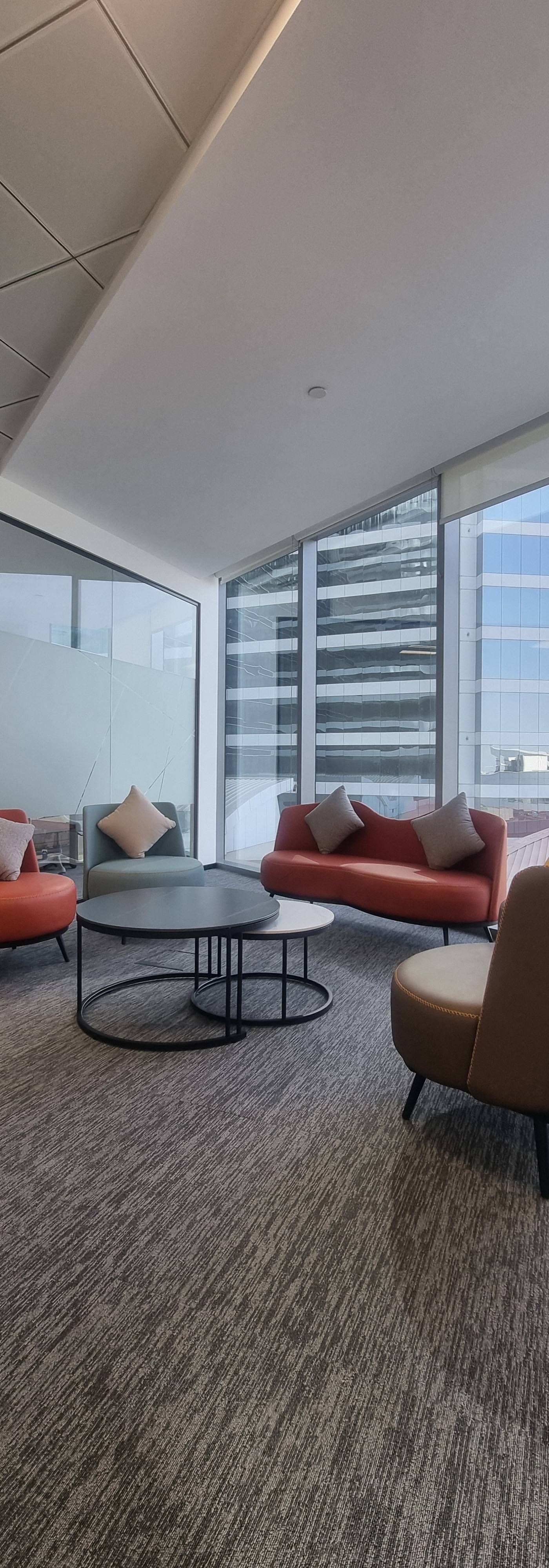 Breakout space carries the same MEP load schedule as the desk area, and reviewers check both.
The sequence and the working days
- Landlord and asset management NOC. Typically 3 to 10 working days, longer if the scope touches the facade, base build sprinklers or a common corridor.
- Free zone fit out permit, for example a Dubai Internet City fit out permit or a d3 approval. Typically 5 to 15 working days on a first submission. A resubmission after comments adds 3 to 7.
- Dubai Municipality and DCD permit for the works themselves. Typically 5 to 20 working days, depending on whether the job is light fit-out or carries MEP and structural work.
- Mobilisation and staged inspections, with separate sign-offs for ceiling closure, MEP and fire systems.
- Completion certificate, as-builts and handover.
Who is named on the permit decides your exit. Usually the tenant holds it with the contractor named on it. That means the completion certificate, the approved drawings and the clearance of inspection comments belong to the tenant at lease end, which is clean if the file is complete and expensive if the contractor walked off with the set. Write the handover obligation into the contract. The office fit out approval process Dubai tenants run with us at INTERIOXPERT technical services builds that handover folder from the first submission.
Five things that get a fit-out file rejected
- Partition or joinery load on a raised floor with no engineer's check. A server room or a heavy storage wall needs the load calculated, and often a plinth.
- An MEP drawing with no load schedule. Reviewers want numbers, not a line saying the existing system is adequate.
- Works shown outside the demised area. Corridor, riser and facade work needs separate landlord approval, and the d3 fit out guidelines treat it as its own submission.
- No fire-rated material specification. Partitions, doors and ceiling tiles need a rating and a certificate to match it.
- Amenity and after-hours works with no NOC. Deliveries, noisy work and weekend shifts need their own permission, and asking late costs days.
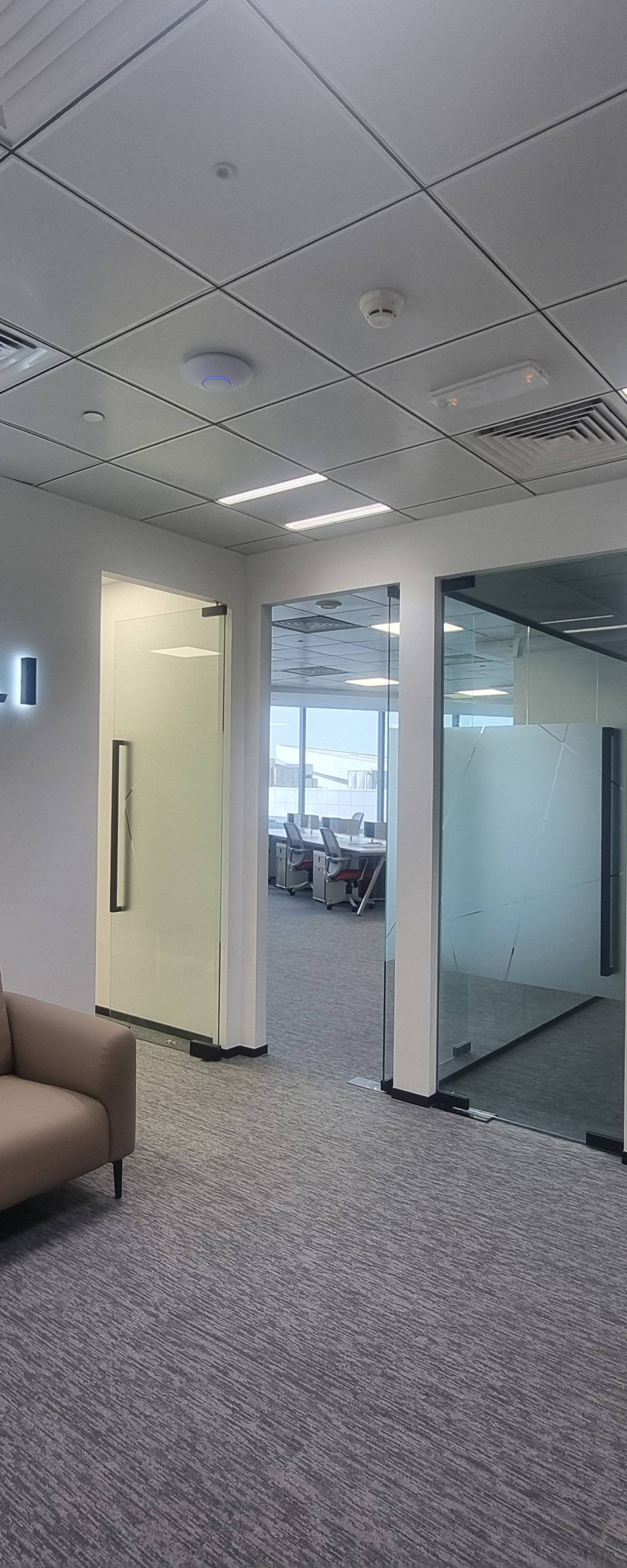
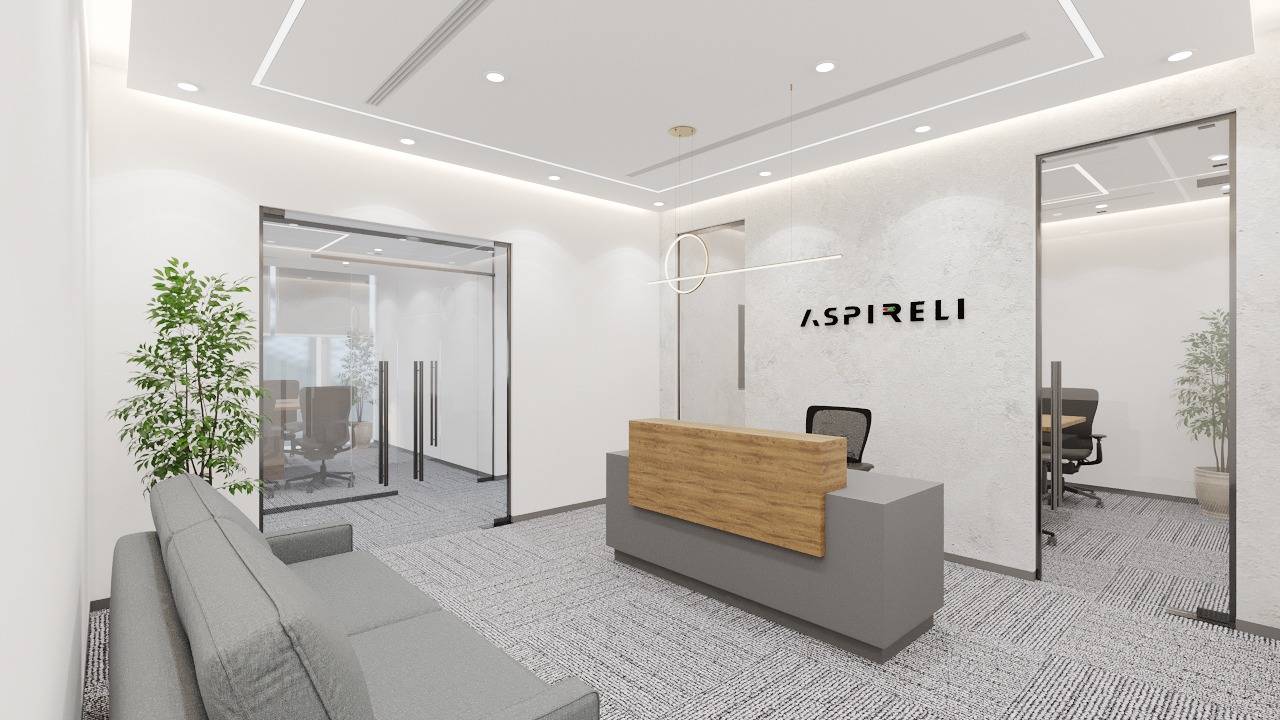 Glass and a backlit logo wall are easy on site. The approval weight sits in the ceiling void and the fire rating behind them.
How tenants lose three to six weeks
The pattern repeats. A tenant signs the lease, orders the long-lead joinery and the reception desk in week one, then opens the approval file in week four. The joinery lands before the permit, sits in storage, and gets re-cut when a partition moves.
The second loss is starting demolition on a landlord NOC alone. A NOC is permission to apply. It is not a permit, and a site visit that finds works running without one can stop the job and send the file back to the start.
The third is a design change after the permit. Move a pantry sink or add a door and you need a revision through the free zone, then through DM again if MEP changed. Lock the layout before submission and hold it. The service side of this work is set out on the interior fit out contractor in Dubai page.
The order that works: file first, joinery orders second, demolition third. That one change is where most of the lost weeks sit. For drawings and construction detail, our interior fit-out and renovation guides cover the site side.
To price this job, send the unit number and building, the floor plan as a PDF, a scope note covering partitions, ceiling, MEP and joinery, and photos of the space as it stands. Add your target handover date. WhatsApp is the fastest route and gets you a written sequence back before you commit to anyone.
Frequently asked questions
Do I need a permit for a fit-out in Dubai Internet City?
Yes. Any fit-out inside a DIC unit needs the free zone permit, and most scopes need the landlord NOC before the file opens. If the work touches MEP, structure or fire systems, a Dubai Municipality and DCD submission follows. Cosmetic work with no services change is the only case where the scope narrows, and you confirm that in writing with the permit desk.
How long does TECOM fit-out approval take?
Typically 5 to 15 working days for a first submission, with the landlord NOC before it taking 3 to 10. A resubmission after comments adds 3 to 7. The DM and DCD permit that follows runs 5 to 20 working days depending on scope. These are ranges, and a complete file is what keeps you at the bottom of them.
Can I use my own contractor in a TECOM free zone?
Usually yes, provided the contractor holds a valid trade licence, registers with the free zone where required, and carries the insurance the landlord asks for. The contractor is named on the permit. An unregistered contractor cannot mobilise, because access passes will not be issued.
What happens if I fit out without approval?
The free zone can stop the works, and a stop notice usually means the file restarts with a site inspection attached. Unapproved MEP or fire system changes are the expensive part, because they may need opening up and re-inspection. Insurance can also be void while works run unapproved.
Is a TECOM approval the same as a Dubai Municipality permit?
No. The TECOM approval covers the unit, the contractor and site access. The DM and DCD permit covers the building works and fire and life safety, with its own inspections. You need both for anything beyond cosmetic work.