Interior Fit Out Defects Liability Period in Dubai
The defects liability period is the stretch after practical completion when the contractor must return and fix faults that appear in the finished works. In Dubai fit out contracts it usually runs 12 months from practical completion, not from the day you take the keys. Snagging is the earlier, separate job: the list you close before that clock starts. Confusing the two is where most post-handover arguments begin.
Snagging closes a list. The DLP covers what shows up later.
A snag is something you can point at on a walk-through. A door binding on its frame, a shadow gap that wanders, a socket plate set off level, a paint line breaking at a corner. You see it, you list it, it gets fixed, you sign it off. That is a pre-completion activity.
The defects liability period covers failure that only appears once the space is used. Sealant shrinking behind a vanity as the AC cycles. A door closer losing its setting after a few hundred cycles. Water tracking under floor tiles because a fall was set a few millimetres short. Grout powdering in a wet area. A joinery joint opening as humidity swings between summer and winter. None of that appears on a snag walk, and none of it is the tenant's fault.
The practical consequence: your snagging list should be closed, or formally rolled into the DLP schedule, before the final stage payment is released. A fit out contract Dubai clients sign that says only that snags are rectified before handover gives you no remedy at month four.
Twelve months is the norm. The start date is what matters.
Any interior fit-out contractor in Dubai will tell you the wording matters more than the length. A 12 month defects liability period fit out clause is standard. Longer periods get negotiated on MEP-heavy jobs and anything the landlord will inherit; some building owners push for 24 months. The length is negotiable. The trigger date should not be.
The clock should start at practical completion, meaning the date certified in the contract or the signed practical completion statement. Not the day keys change hands. Not the day you open for trading. Not the day the landlord finishes reviewing the fit-out approval six weeks later. If your contract defines the start as handover and leaves handover vague, an approval delay quietly eats your cover.
Two approvals run alongside the DLP and are not the same thing. The Dubai Municipality completion certificate for the fit-out permit confirms the works as built match the approved drawings. The landlord's own fit-out approval, or NOC, carries its own conditions, and some building management teams expect a defects period written into the tenancy as well. Read your DLP clause against both before signing. Where they conflict, the stricter condition is what you will actually live with.

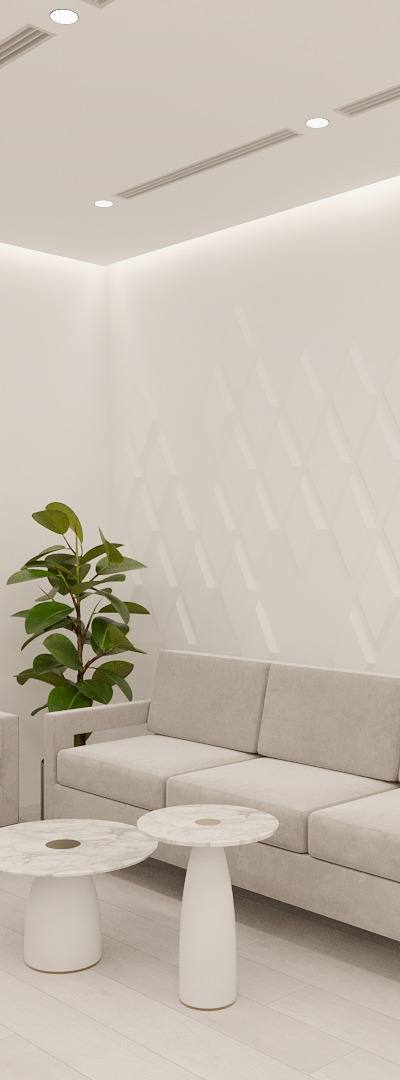
Waiting area from a completed office fit-out. Joinery joints, veneer edges and lighting control settings are the items that most often come back on a DLP schedule.
Five clauses that decide how the DLP plays out
Put these in plain words in the contract. Ambiguity here is what a claim gets built on.
| Clause | What to pin down |
|---|---|
| Definition of a defect | Failure of the works to meet the specification or approved drawings, including faults in materials and workmanship. Say plainly whether cosmetic wear, tenant damage and consumables are excluded. |
| Notice and response | Who notifies whom, in writing, and how fast. A workable split is 48 hours for anything affecting safety, water or power, and 7 days for everything else. |
| Retention | Commonly 5 to 10 percent of the contract sum. State whether it releases in halves at practical completion and DLP end, or all at the end, and what the release is conditional on. |
| Access and re-covering | Who pays to move furniture, open ceilings, lift floors or dismantle a fitted reception desk to reach a defect. Contractor for a genuine defect, tenant for anything caused by tenant works. |
| Certification at the end | A named person issues a defects liability certificate or close-out letter. Without one, retention has no release mechanism and the period never formally ends. |
On retention, the split matters more than the percentage. Half at practical completion and half at DLP end keeps attention on month eleven. All of it at the end, with no interim release, tends to be resisted and can push the price up.
The grey zone: tenant equipment, HVAC misuse and later works
Not every fault in the first year is a defect. Three arguments come up repeatedly.
Tenant-installed equipment. An IT rack dropped into a store room with no supplemental cooling, and the room overheats. The base build AC was designed for people, not for a server load. That is a design change, not a defect.
HVAC and controls misuse. Filters never cleaned, set points driven down hard in August, controls bypassed by a facilities team that has not opened the O&M manual. The unit fails and it looks like an installation fault.
Later third-party works. A tenant's own contractor cuts into a partition, drills through a waterproofed floor, or taps a chilled water line. The DLP on that element lapses for the area touched.
Handle it at the time, not at the end. When something is reported, inspect it jointly, photograph it, and write a two-line note saying whether it is treated as a defect under the DLP or as tenant damage. The office fit-outs in our portfolio went through the same sequence, and the jobs that close cleanly are the ones where that note exists from month one.
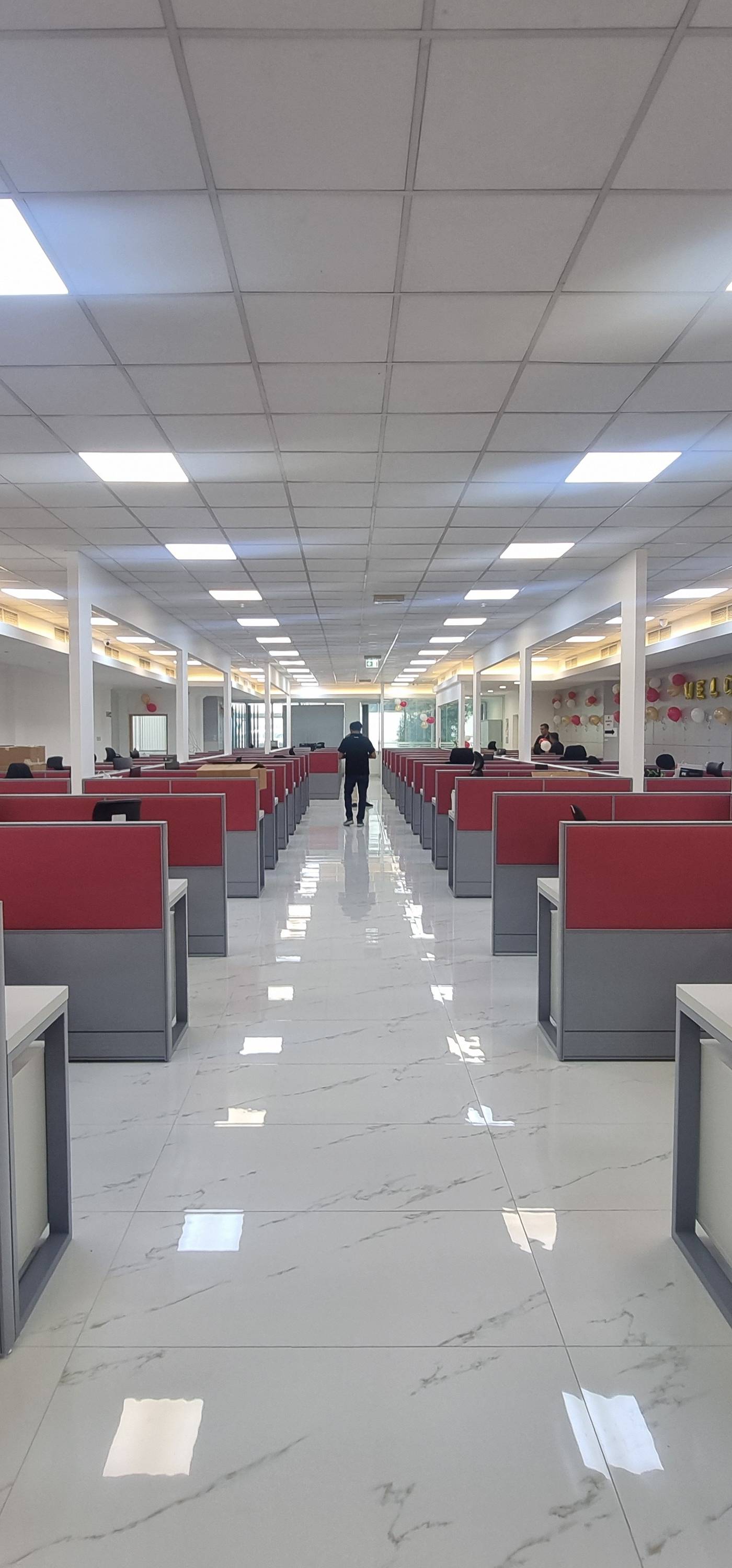
Open-plan floor plates expose defects quickly: partition joints, tile lippage and sensor grouping all show up in the first months of use.
What to hand over at practical completion, and how to close the DLP
At fit out handover Dubai clients should ask for the file, not just the keys: as-built drawings reflecting what was actually installed rather than the tender set, O&M manuals with model and serial numbers filled in, warranties in the client's name for joinery, glass and glazing, ironmongery, sanitaryware and MEP plant, test and commissioning certificates for electrical, plumbing and fire systems, attic stock of tiles, paint, laminate and fabric, and one named contact for the DLP window with an escalation route. We cover handover paperwork in more detail in our more interior fit out guides.
Closing out is a joint final inspection, a defect schedule signed off as complete, release of retention, and a written defects liability certificate. Get that letter. It protects both sides.
To price a fit-out with a DLP you can actually enforce, send us the floor plan with dimensions, ceiling heights, photos of the shell as it stands, the landlord's fit-out approval conditions, and any DLP wording you have been offered. WhatsApp is the fastest route on +971 58 510 1641. You can also ask about our fit-out contract terms before you sign anything.
Frequently asked questions
Does the defects liability period start at handover or practical completion?
It should start at practical completion as certified in the contract, not at key handover. If the clause says handover and handover is undefined, months can pass during landlord approval or fit-out snagging before your cover even begins. Get the trigger written as practical completion.
How long is a defects liability period in UAE fit-out contracts?
Twelve months from practical completion is the market norm. Plant rooms, MEP-heavy scopes and anything the landlord inherits sometimes attract 24 months. Length is a commercial negotiation, so trade it against retention and response times rather than accepting both at their strictest.
How much retention is normal on a fit-out in Dubai?
Five to ten percent of the contract sum is the usual range, released either in halves at practical completion and at DLP end, or entirely at the end. The release mechanism matters more than the number. A named certifier and a dated release condition stop retention sitting open indefinitely.
What is not covered by a defects liability period?
Damage from tenant equipment, HVAC misuse, accidental impact, and any area altered by later third-party works falls outside it. Wear and tear on consumables such as lamps and filters is normally excluded too. Record each reported issue in writing at the time so the cause is agreed while the evidence is fresh.