Interior fit out defects liability period Dubai explained
A defects liability period is the window after handover when your fit out contractor must return and fix faults in its own work at no cost to you. On commercial work in Dubai it is normally 12 months from practical completion, shorter on small fast-track jobs, longer where a landlord insists. The length matters less than the wording you signed months before anyone picks up a snagging list.
The DLP is settled at signing, not at handover
By the time you are walking the unit with keys in one hand, the clause is fixed. It sits in the main contract or the letter of award and it names three things you can no longer change: when the clock starts, what counts as a defect, and what remedy you actually have.
Start date is where office and retail tenants lose weeks. Clauses usually read from practical completion of the works. Practical completion can be certified before DEWA supply is energised and before Civil Defence approval is issued, and a unit cannot trade without both. If handover to you lands a month after that certificate, a month of cover has gone on a shop you could not open. Ask for the start to be tied to a document you sign on the day you take the unit.
The definition of a defect matters just as much. Without one, month four becomes an argument about whether a sticking door is failed workmanship or heavy-handed staff.
Snagging and the DLP are two lists on two clocks
Snagging is the inspection list before handover. The DLP is your right to call the contractor back afterwards. They get merged in conversation, and claims die in the gap.
| Snagging | Defects liability period | |
|---|---|---|
| When | Before handover, at inspection | After handover, from practical completion |
| What it is | Incomplete or wrong work found on site | Faults that appear in finished work under normal use |
| Clock | Ends when the list is closed and you take possession | Runs for the contracted period regardless |
| Remedy | Contractor completes before final payment | Contractor returns and rectifies at its own cost |
Keep them apart in your own files: one register, numbered, with the date logged, location, owner and sign-off date. If an item closed at snagging fails again under normal use, log it as a new DLP defect. Do not reopen a closed snag list. You will be told it was signed off at handover, and that will be true.

Frame heads, door closers and drop seals on black-framed glass partitions are the first month-three call on most office jobs.
What a normal commercial DLP looks like in Dubai
Twelve months from practical completion is the market baseline for office, retail, F&B and showroom fit outs. Six months appears on small fast-track work. Mall operators and developers will sometimes ask for 24 months on waterproofing and MEP, and if you accept that without passing it down, you are funding the second year yourself.
Covered in a well-drafted clause: workmanship failures such as tiles lifting, paint blistering, cracked joints and failed sealant; waterproofing in pantries, washrooms and kitchen areas; MEP installations including AC, drainage, small power and lighting controls; joinery failure such as doors dropping, laminate peeling and loosening ironmongery; partition and ceiling failures where the fixings were not to spec.
Excluded, and it should say so: fair wear and tear, damage by you or your other contractors, consumables such as lamps, filters and batteries, and anything altered by a third party after handover. Design faults where you specified the product are usually a separate argument and worth settling in writing rather than discovering at month nine.
On our own office handovers, the first call after three months comes from the glass partitions, not the ceiling: a door closer out of adjustment, a drop seal dragging, a sealant line failing at the frame head. None of that is a design failure. It is workmanship, and if it appears after handover it belongs on the DLP register.
Retention, and why the final release is your only real leverage
Retention is a percentage held from each payment through the job and released in stages. The usual commercial split is part at practical completion, against the snag list being closed, and the balance at the end of the DLP, against a signed defects or maintenance certificate. Percentages vary by contract, which is why the trigger matters more than the number.
Read that trigger closely. If retention releases at handover while the DLP keeps running, you have handed back every lever. Contractors prioritise jobs where money is still held. An open defects register with a certificate pending beats a patient email chain at month eleven. If the entity signing is newly formed, ask what stands behind the obligation.
The landlord's clock is not your contractor's clock
In a mall, a managed tower or a master development, the landlord imposes its own DLP on you through the fit out approval and tenant handbook. It can be longer and wider than what your contractor owes you, with defects reported through the landlord's portal, access windows and permits before anyone opens a ceiling.
Two clocks, two documents. Where the landlord wants 24 months on waterproofing and your contractor's clause says 12, the gap is yours. The fix is simple and rarely done: put the landlord's terms in front of the contractor at tender and ask for them to be priced, not accepted quietly after the permit is issued. If access needs a permit, a response time that ignores it is fiction.
Subcontracted MEP fails the same way. Your contractor stays your single point of contact for the AC and the electrical installation whatever its subcontract says. Name the MEP subcontractor in the contract and require the main contractor to carry their response times.
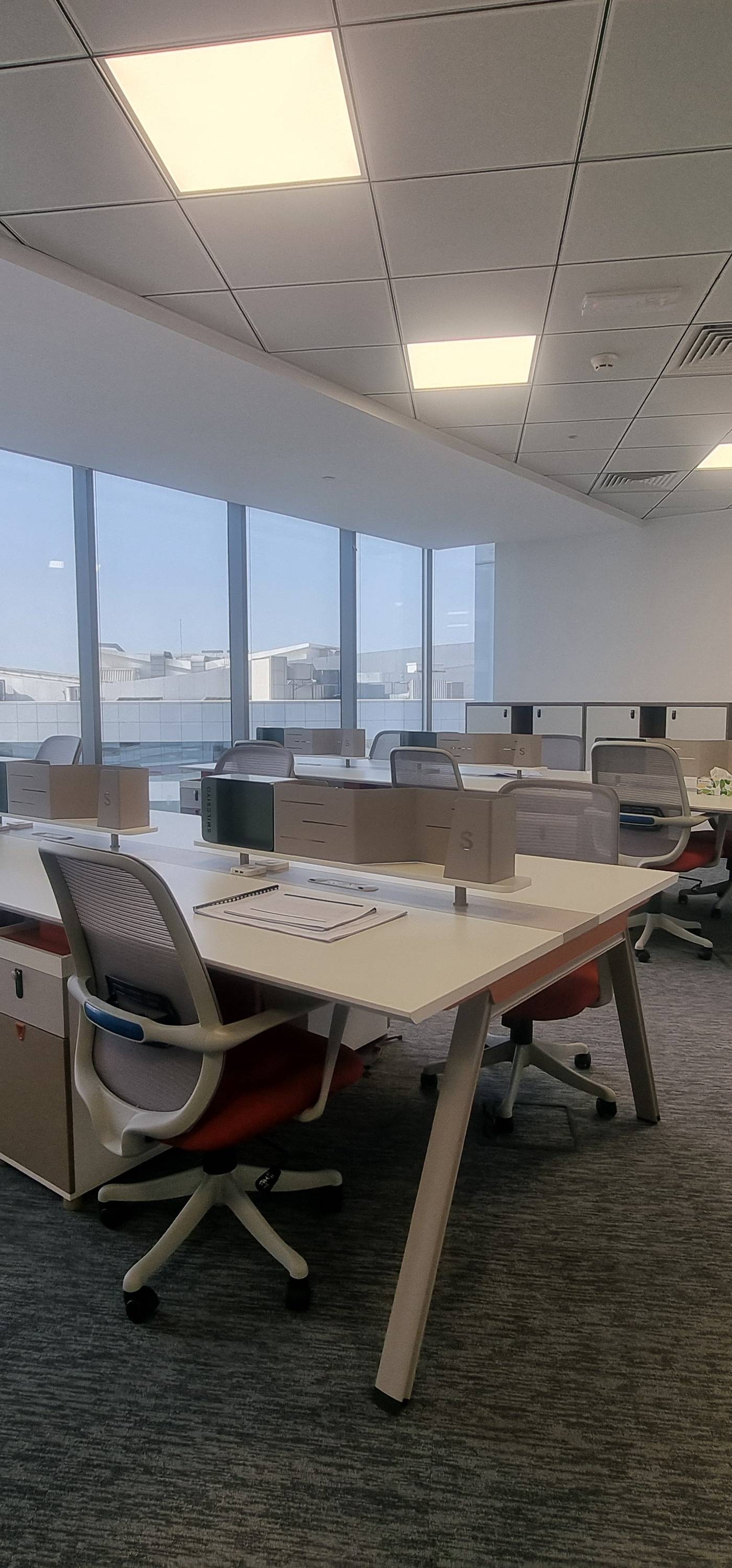
Full-height glazing pulls blind hardware and solar gain into the aftercare conversation, though tenant damage stays outside the DLP.
What to insist on in writing
A single start date, tied to a certificate both parties sign. Response times in two tiers, normal defects and a shorter one for water leaks or AC failure in a trading unit. One named contact with a phone number, not a general inbox. A defects register format you both use, numbered and dated, with your own copy. A clear answer on whether the DLP survives assignment if you sell the business or transfer the lease. The landlord's terms, priced and passed down, including the sprinkler and fire alarm interface at the common-area boundary. Final retention release triggered by a defects certificate, not by the expiry date alone.
For the work these clauses sit on, look at what an interior fit out contractor in Dubai actually hands over, and there are more interior fit out guides on the blog if the handover side is your next problem.
To get aftercare terms priced on your job, send the unit location, the floor area, the drawing set you are working to, and photos of the shell. Ceiling height, riser positions and the state of the floor slab tell us more than a mood board. If a draft contract already exists, send the DLP and retention clauses as a PDF or a clear photo and we will mark them up. WhatsApp is the fastest way to start on +971585101641, or talk to us about your fit out contract.
Frequently asked questions
How long is a defects liability period on a fit out in Dubai?
Twelve months from practical completion is the common baseline on commercial fit outs. Six months appears on small fast-track jobs, and landlords sometimes demand longer for waterproofing and MEP. Whatever length is agreed, the start date definition matters more than the number.
Does the DLP start at handover or at practical completion?
Usually at practical completion of the works, which can fall before the unit reaches you and before DEWA and Civil Defence approvals are in place. Ask for the start to be tied to a document you sign on the day you take the unit, or you lose cover before you can trade.
Is snagging part of the defects liability period?
No. Snagging is the pre-handover inspection list and ends when it is closed and you take possession. The DLP runs afterwards and covers faults that appear in finished work under normal use. Keep two registers and two sets of dates.
Can I hold retention until all defects are fixed?
That depends on the release trigger in your contract. The final portion is normally released at the end of the DLP against a signed defects or maintenance certificate, so make the certificate the trigger rather than the expiry date.
Does the DLP cover subcontracted MEP work?
It should. Your contractor remains your single point of contact for AC, drainage and electrical work even when the installation was subcontracted. Name the MEP subcontractor in the contract and require the main contractor to carry their response times.