Interior fit out defects liability period Dubai: a guide
The defects liability period is the post-handover window in which your fit-out contractor must return and rectify defects in its own work at its own cost. It starts when the completion certificate is signed, not when the snagging list is closed, and in Dubai its length and terms come from your contract rather than from any rule. Below is what the period should cover, what it never covers, and how to keep it usable.
Snagging, DLP and maintenance are three different clocks
Snagging is the inspection before handover. You walk the space with a list, the contractor closes it, you sign. The defects liability period begins after that signature and deals with what fails in use: a door that drops, a joint that opens, a shower that leaks into the corridor.
Most disputes I see are not really about workmanship. They are about which clock a problem belongs to.
| Snagging | Defects liability period | Maintenance | |
|---|---|---|---|
| What it covers | Visible faults and incomplete items at inspection | Defects in the installed work that appear after handover | Planned servicing of what you now own |
| When it runs | Before the completion certificate | From the completion certificate, for the period your clause states | From handover onward, often on a separate contract |
| Who pays | Contractor | Contractor | Owner or tenant |
| Written instrument | Snagging or punch list | Contract clause plus written defect notices | Service agreement or scope of works |
A blocked AC filter, a failed lamp, a worn door seal: maintenance. A partition that has moved off its track, a veneer lifting at a cupboard edge: DLP. Tenants who label maintenance items as defects lose credibility on the claims that matter.
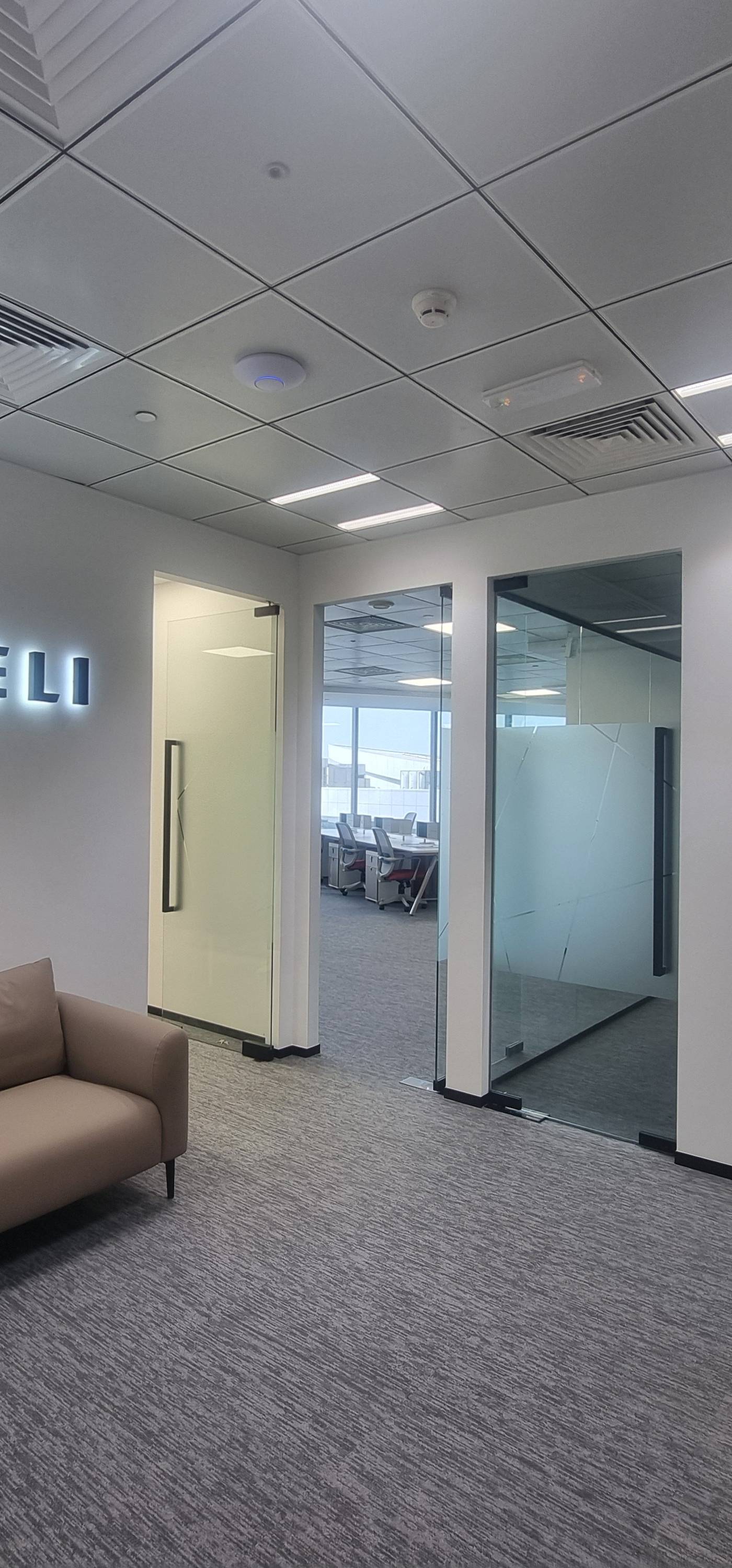
Reception joinery and lighting on a delivered office fit-out. Wall panelling, backlit lettering and door ironmongery are exactly what a DLP clause is written to protect.
What sits inside the period, and what stays outside
Inside, in most interior fit out handover documents I have worked to: failed joints in tile, stone and screed; water ingress at wet areas, showers, pantry sinks and kitchen floors; door leaf and ironmongery misalignment, including closers that stop latching; MEP commissioning failures such as unbalanced air, nuisance tripping, or drainage that does not clear as specified; movement and cracking in drywall and glass partitions; and joinery delamination, where veneer lifts or edging peels because of humidity or adhesive failure.
Outside: damage by your staff, your other contractors or your deliveries; ordinary wear and tear; misuse; alterations by a third party, which usually voids the clause for the altered element; and consumables such as lamps, filters, batteries and seals.
The contractor's side is worth stating plainly. A fit-out company carrying in-house joinery and MEP teams closes these items faster than one relaying tickets to subcontractors who have been paid and moved to another job. In the first two weeks of a claim, that difference is the whole experience. It is also why the argument for a turnkey interior fit out contractor in Dubai starts with what sits inside the company, not with the certificate wording.
How long it runs, and why your clause beats market practice
Twelve months from handover is common practice in the Dubai market for interior fit-out. Treat it as a benchmark, not a rule. There is no statutory DLP for private fit-out contracts here, so the clause you signed is the only thing that binds anyone.
Read four points in it: the start trigger, meaning the completion certificate date or handover of your area, not practical completion of the base building; the notice mechanism, because most clauses require written notice inside the period or the right lapses; the response time, which should state a number of days for a first visit; and whether a repaired element gets a fresh period. That last one is worth negotiating. Rectify at its own cost is the obligation you want, not a promise to inspect.
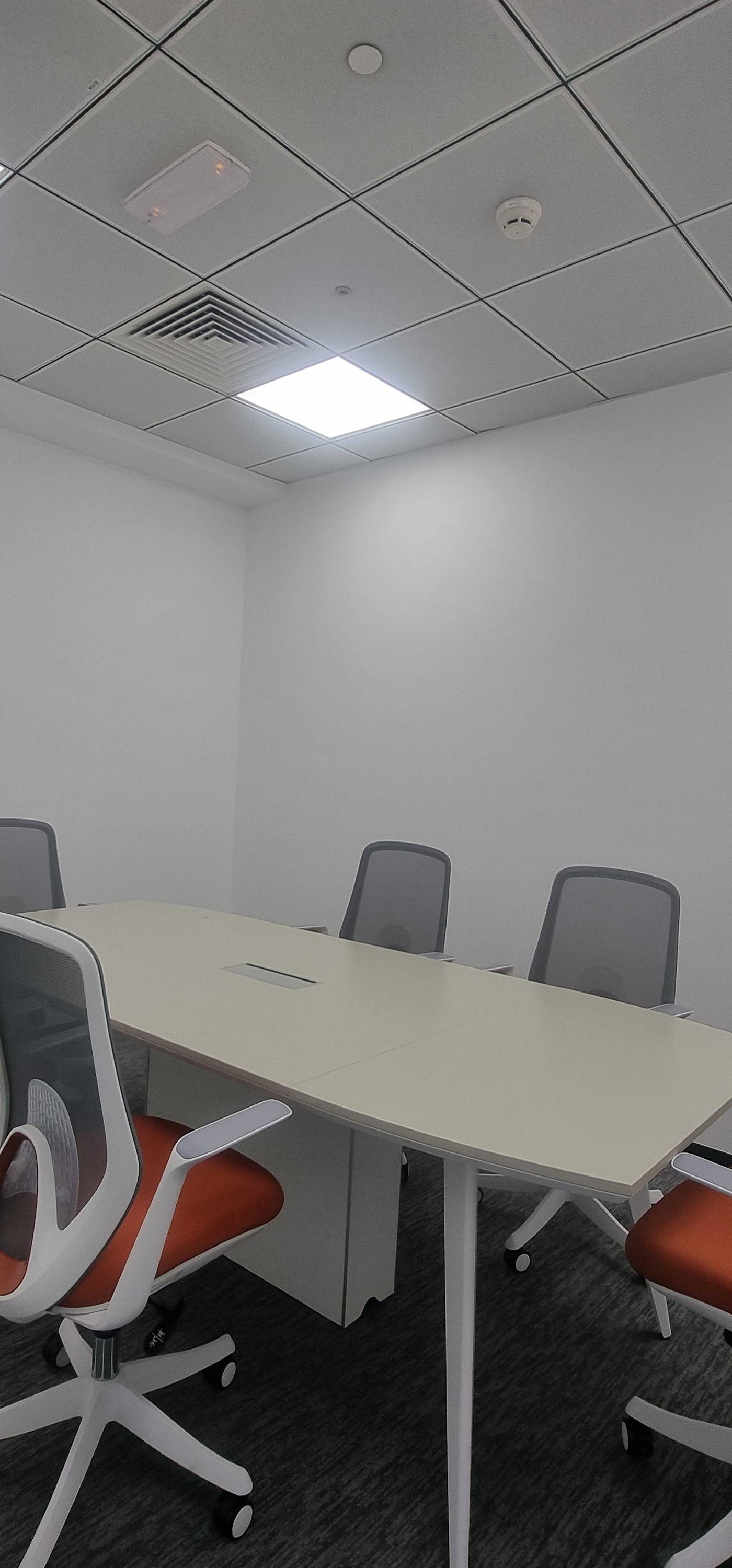
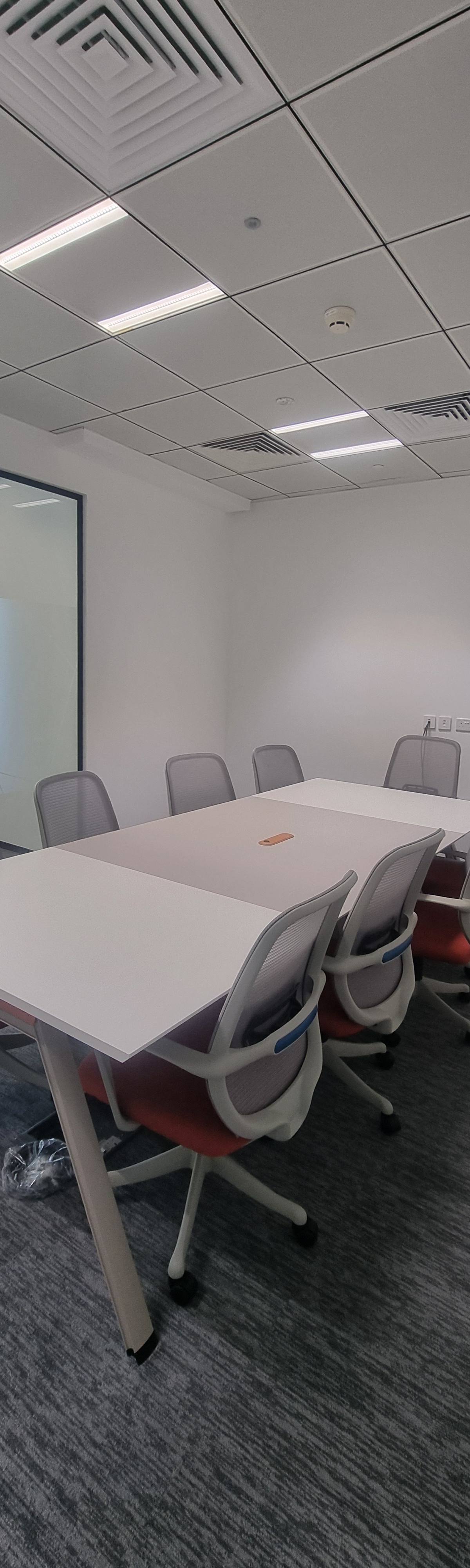
Six seats, one diffuser, one return grille. Air balance and ceiling services in rooms like this are a commissioning issue, and commissioning failures sit inside the DLP.
Retention, final payment and what must be written down
Retention is money held back from interim payments until the work has proved itself. In fit-out contracts it usually releases in two parts, one at handover and the balance at DLP completion against a certificate. Insist the contract states the percentage, the release trigger, who issues the certificate and on what evidence, and how many days the employer has to pay once it is issued. A fit out retention clause with no release date is not security. It is a negotiation you will have in month fourteen with less leverage than you had at handover.
Running the period, and the handover checklist
Five habits keep a DLP usable. Give notice in writing every time, dated, with photos, the room and the effect on your business, then follow a WhatsApp message with an email. Hold the fit out contractor Dubai employers actually hold, meaning the one named in your clause, to the stated response time rather than to goodwill. Keep one photo set and one log instead of a thread spread across three phones. Agree access in advance if you are in an occupied office or a trading restaurant, including out-of-hours windows, escorts, permits and which areas stay off limits during service. Escalate in writing if a notice goes unanswered, referencing the clause and the retention release, before the period ends rather than after.
Before you sign the completion certificate, check the DLP length and start date, the notice method and address, response times, retention percentage and release dates, the as-built drawings, O&M manuals, MEP commissioning records and warranties, a closed and signed snagging list, named contacts for defect notices, and an access protocol for your building. Completed fit-out projects in Dubai are a fair guide to how a contractor documents this, because documentation decides whether a claim gets answered.
To get a defect looked at or a DLP response priced, send photos of each item with the room name, the handover date, the relevant DLP clause from your contract and the floor plan. If your building restricts access hours, say so in the first message. WhatsApp on +971 58 510 1641 is the fastest way to talk to us about fit out handover and DLP terms, and more background sits in our interior fit-out guides.
Frequently asked questions
Does the defects liability period start at handover or at completion?
In most Dubai fit-out contracts it starts on the date of the completion certificate or the handover of your area, whichever the clause names. It does not start when your staff move in, and it does not run from practical completion of the base building. Check the trigger wording before you sign, because a vague trigger is the easiest thing to dispute later.
Who pays for putting a defect right during the DLP?
The contractor, if the item is a defect in its work rather than damage or wear. Labour, materials, access and making good usually sit inside that obligation. If the cause is a tenant alteration or a third party, the cost moves to you.
Can a contractor refuse a claim during the DLP?
Yes, and sometimes legitimately: the item may be maintenance, tenant damage or an excluded element. That is why a notice should state the cause and attach photos. A refusal in writing inside the response time is a proper answer. Silence is not.
Is retention released before or after the DLP ends?
Usually in two parts, one at handover and the balance at DLP completion against a certificate. The contract should name the percentage, who certifies and the payment period after that certificate. Without those three, expect a slow negotiation.
Does the DLP cover AC, electrical and plumbing?
It covers failures of the installed systems to perform as specified, such as unbalanced air, nuisance tripping or drainage that will not clear, where the cause is installation. Consumables, filters, lamps and routine servicing stay with you.